The first version of the game had five bags. Each one was a different size and a different set of blocked cells, and that was enough to prove the idea: the shape of a bag changes the whole puzzle. A wide bowling bag rewards long, flat items. A tall backpack lets you stack. A bucket bag punishes anything that needs a corner.
But five bags made the game feel like a prototype. A puzzle about choosing what goes where needs a wardrobe, not a sample sale. We wanted the lookbook to feel like a collection you could browse on a slow afternoon — the kind of shelf where every item has a reason to exist.
Eight families, eight points of view
The collection starts with eight silhouettes: backpack, baguette, bowling, tote, bucket, weekender, crossbody, and hobo. Those are the shapes people already know. The interesting work happens inside each family.
Each family contains eight designs, and each design belongs to an edition: Signature, Heritage, Rebel, Market, Gala, Cloud, Atelier, or Velvet. The edition is not a color swap. It changes the details that give a bag its character — the hardware, the stitching, the surface, the charm, and sometimes the outline itself.
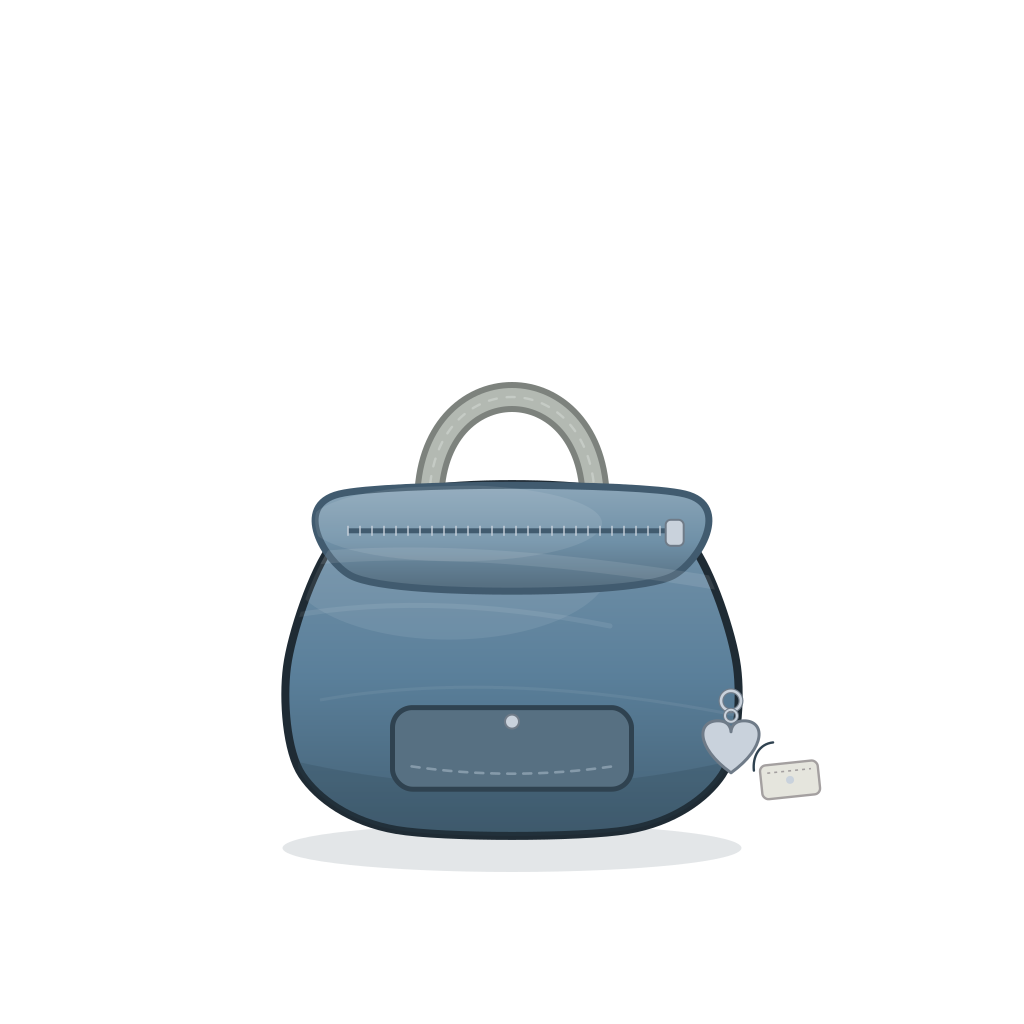
A Heritage bag is quiet and archival: antique brass, quilted panels, a pearl charm. A Rebel bag is louder: studs, gunmetal, a tiny padlock. A Gala bag has patent shine and a heart charm. The same family can read as a library tote or a party purse without losing its basic grammar.
The silhouette is the puzzle
Every design is drawn as an SVG first, then given a grid. The grid is not an afterthought. The outline decides which cells exist, which cells are blocked, and how the bag closes. Move a handle two units to the left and a whole class of layouts disappears.
That is why we could not simply recolor one backpack sixty-four times. A colorway is a mood; a silhouette is a rule set. The two have to be designed together. The Plum Atelier backpack and the Coral Velvet backpack share a family, but they do not share a solution.
The result is a lookbook where the collection is legible at a glance but still full of small discoveries: a luggage tag here, a monogram there, a charm that catches the light when the bag closes. The bags are not rewards for finishing the game. They are the game.
A colorway is a mood. A silhouette is a rule set. We design them together.
When you collect a bag, it stays in the lookbook with the date you first borrowed it. Over time the shelf becomes a record of your mornings. That is the part we are proudest of: sixty-four designs, and each one can mean a day.